
When the real picture of your business is spread across a CRM, a spreadsheet, and three other tools, someone spends hours each week stitching it together, and the answer is already stale by the time it lands. A custom dashboard reads from those sources directly and shows the current state, live.
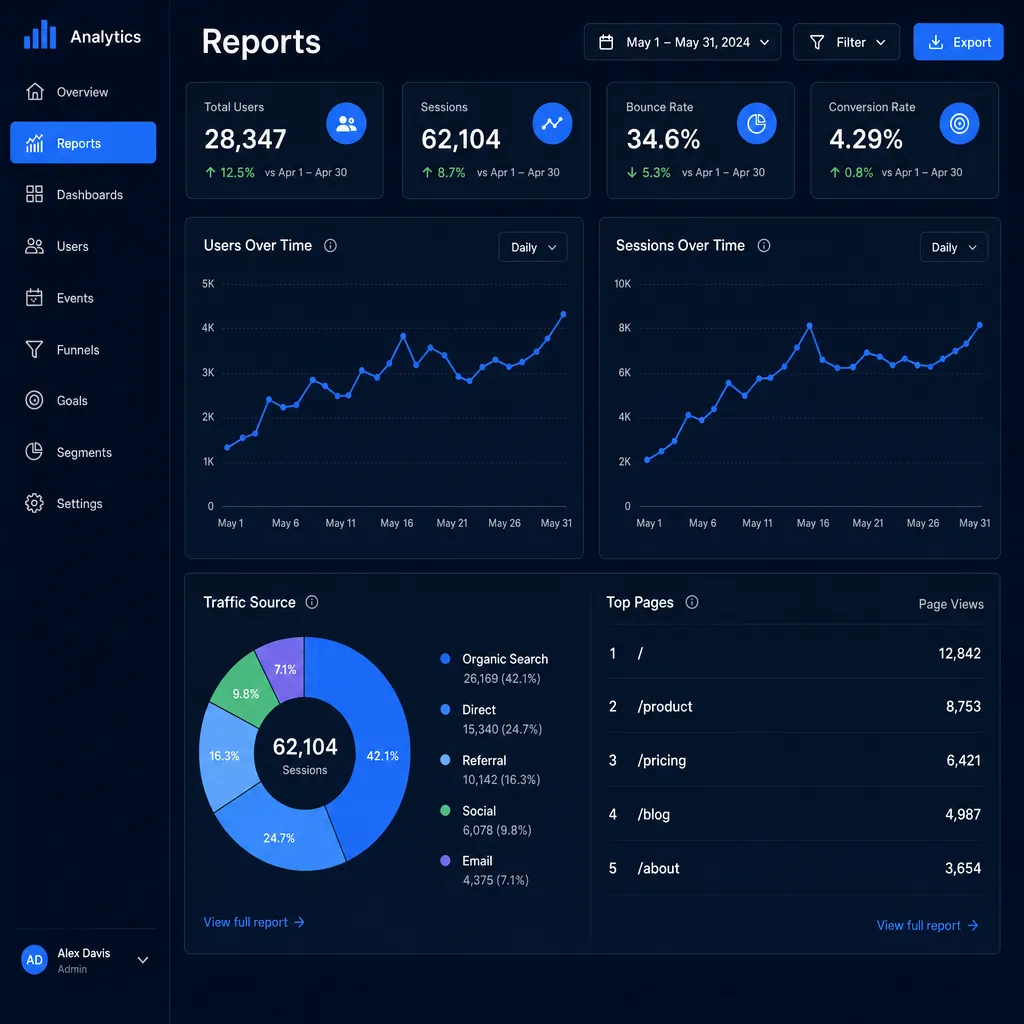
We build dashboards around the decisions you actually make, not a generic chart library. That means the right metrics, grouped the way your team thinks about them, with the detail a click away when someone needs to dig in.
What you get
Connected sources
We pull from your CRM, accounting, database, or tools so the numbers are live.
The right metrics
Charts and tiles built around your decisions, not a stock template.
Drill-down
Click a number to see the rows behind it, so the dashboard answers the next question too.
Role-based views
Leadership, ops, and sales each see the cut that matters to them.
Live or scheduled
Real-time where it helps, scheduled refresh where that is enough.
Export and share
Clean exports and shareable links for the people who need a copy.
How it works
- Define the decisionsWe start from what you need to decide, then work back to the metrics.
- Connect the dataWe wire up the sources so the dashboard reflects live state.
- Build the viewsYou review the layout and the cuts before we finish.
- Launch and tuneWe deploy, then adjust the views as your team uses it.
Signs this is the right fit
- Someone rebuilds the same report in a spreadsheet every week.
- Different teams quote different numbers for the same thing.
- By the time a report is ready, the data has already moved on.
questions
Where does the data come from?
From the systems you already use. We connect to your CRM, accounting software, database, or other tools through their APIs or a direct connection, so the dashboard shows live data.
Can different people see different dashboards?
Yes. We set role-based views so leadership, operations, and sales each see the cut that is relevant, without exposing data they should not see.
Is it real-time?
It can be. We use real-time where it changes a decision and a scheduled refresh where that is enough, which keeps it fast and cost-effective.
What if our metrics change later?
Because you own the code and the dashboard is built around your sources, adding or changing a metric is a normal update, not a rebuild.
related services
Plan your internal dashboards.
Send the process that is breaking down or the tool you wish existed. You get a real reply from the people who would build it, usually within one business day.